
Electrical Maintenance Programs (EMP): What They Are and Why Everyone Is Talking About Them
Most facility teams don’t ask about electrical maintenance programs during calm periods. They ask after an insurance questionnaire arrives, a panel fails, a fire gets too close, or corporate sends an audit notice. By then, everyone is scrambling to produce records that should have been building quietly for years.
An Electrical Maintenance Program (EMP) is how you get ahead of that moment. Here’s what it is, why it’s suddenly everywhere, and how to start without upending your budget or your schedule.
At AAA Facility Services, we see an EMP as a good example of how a whole facility should be maintained: as one planned, documented system instead of a set of separate jobs.
What an EMP is (and what it isn’t)
An EMP is a repeatable system, not a one-time inspection and not a binder on a shelf. It shows what electrical equipment you have, what condition it’s in, how it’s inspected, tested and maintained, how findings get corrected and verified, and how every decision is documented over time.
The payoff is practical: fewer emergency failures, better reliability, and records that hold up when someone asks. It moves electrical maintenance from reactive problem-solving to planned, defensible facility management, without ignoring budgets, staffing limits or day-to-day operations.
Why everyone is talking about it now
Expectations have shifted. NFPA 70B is now the mandatory standard for electrical equipment maintenance, even where enforcement varies. Insurance carriers, risk managers and corporate compliance teams increasingly measure maintenance programs against it.
The risk itself didn’t change. What changed is how it gets evaluated after the fact. Many facilities handle electrical maintenance as disconnected tasks: an inspection here, infrared testing there, repairs whenever something fails. That used to be enough, until documentation started getting reviewed as a whole.
Today, facilities are being asked to show:
- Planned maintenance, not just performed work
- Consistent execution, not isolated efforts
- Verified corrections, not open findings
The key question is no longer whether maintenance happens. It’s whether you can demonstrate it, consistently and defensibly.
What a defensible EMP includes
A working program has seven parts:
- Clear ownership and decision-making authority
- A complete, accurate equipment history
- Up-to-date single-line diagrams and electrical studies
- Risk-based maintenance tasks and frequencies
- Qualified inspections, testing and infrared thermography
- Documented corrective actions and verification
- Ongoing review and continuous improvement
How the pieces fit together
Electrical safety isn’t one standard or one test. It’s four things working together:
| Piece | What it covers |
|---|---|
| NEC (National Electrical Code) | Maintain compliant installations, address deficiencies, document corrective actions |
| NFPA 70B | Perform scheduled maintenance, document inspections, track corrective work |
| NFPA 70E | Train personnel, maintain safety procedures, reduce workplace risk |
| Infrared testing | Identify hidden issues, test critical equipment, maintain inspection records |
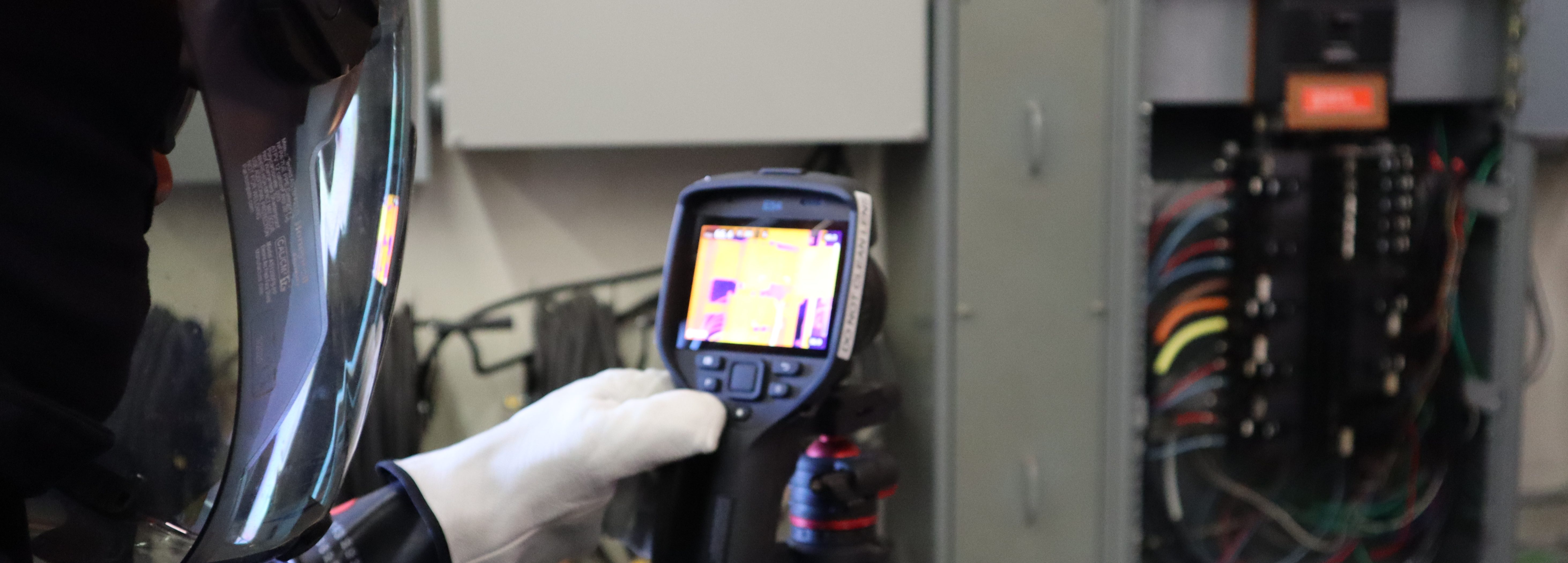
Two distinctions are worth keeping straight. An EMP manages the condition of your equipment, while an electrical safety program protects your people. And infrared thermography, which finds abnormal heat from loose connections, overloads and deteriorating components, is required but is only one piece of a complete EMP. Risk drops only when the findings are repaired and documented.
Findings only matter when they get fixed
An EMP is only as strong as what happens after an inspection turns up a problem. Findings have to be repaired and verified, and that work rarely stays inside one trade. A loose connection may mean a straightforward electrical repair, a failing component may call for a replacement project, and an urgent issue may need emergency response. When one team handles the inspection, the repair, the follow-up and the emergency call, findings are easier to close out and the records stay in one place.
When to start: before someone else asks for proof
The best time to build or improve an EMP is before an incident, an audit or an insurance review forces the issue. A program takes planning, accurate records and execution over time. Starting early lets you schedule work during controlled outages, spread costs predictably, close gaps methodically and make informed repair-or-replace decisions. Controlled outages are also the natural time to coordinate other maintenance and repairs in the building, so you take the downtime once instead of several times.
Facilities that wait usually face tighter timelines, higher costs and fewer options. If you’re responsible for electrical systems today, the right time to address EMP requirements is before someone else asks for proof.
Ready to find out where your facility stands?
Talk with us before someone else asks for proof. Whether you’re starting with electrical or looking at the whole building, we can help. Call (800) 892-4784, email service@aaafs.com, or visit aaafs.com to start building an Electrical Maintenance Program you can stand behind, and a maintenance plan for the rest of what your facility depends on.
AAA Facility Services, LIC 733738
Where to find help
You can run an EMP internally, take a hybrid approach, or hand it to a fully managed partner. AAA Facility Services supports the whole lifecycle: program setup, equipment inventories, inspections, infrared testing, documentation, corrective actions and ongoing audits. Need guidance, extra hands or complete program management? We’ll fit the level of support to your team.
And your electrical system doesn’t operate in isolation. AAA Facility Services is one partner for the trades your facility runs on, including electrical, plumbing, construction and repair and maintenance, with emergency service available across all of them. One relationship, one standard of work, and one team that already knows your building.
Leave a Reply